
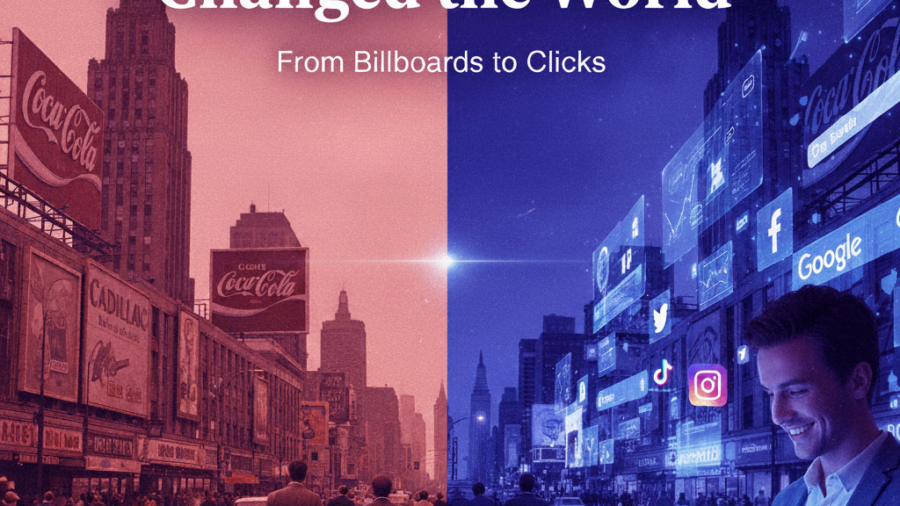
In just a few decades, the way we live, shop, and communicate has undergone a radical transformation. Gone are the days when a brand’s success depended solely on a massive billboard in Times Square or a 30-second TV slot during the news. Today, the world is digital, and the bridge between a business and its customer is just a click away.
Here is how digital marketing has fundamentally reshaped our global landscape.
1. The Death of Geographical Boundaries
Before the digital era, small businesses were often confined to their local neighborhoods. If you owned a boutique in a small town, your customers were only the people who lived nearby.
- The Change: Digital marketing has leveled the playing field. A craftsman in a remote village can now sell handmade goods to a customer in New York via Instagram or an e-commerce store. The world is now one giant marketplace.
2. From “Shouting” to “Listening”
Traditional marketing was a one-way street: brands “shouted” their messages at you through radio or print, and you had no way to talk back.
- The Change: Social media and review platforms have turned marketing into a two-way conversation. Brands now listen to real-time feedback, answer questions in the comments, and adapt their products based on what the “crowd” actually wants.
3. Hyper-Personalization: Ads That Actually Matter
We’ve all experienced it—you search for a pair of running shoes, and suddenly, your feed is full of helpful gear. While some find it “creepy,” it is a massive shift from the “spray and pray” method of old marketing.
- The Change: Instead of seeing irrelevant ads for things you don’t need, data-driven marketing ensures you see content tailored to your interests. It saves consumers time and helps businesses spend their budgets more efficiently.
4. The Rise of the “Micro-Influencer”
In the past, only A-list celebrities had the power to influence public opinion.
- The Change: Digital marketing birthed the Influencer Era. Today, a person with a few thousand dedicated followers can have more impact than a movie star. This has democratized “fame” and allowed niche communities—from vegan cooking to high-tech coding—to thrive.
5. Real-Time Success Tracking
Imagine spending $50,000 on a newspaper ad and having no idea how many people actually bought your product because of it. That was the reality for decades.
- The Change: With tools like Google Analytics and Meta Insights, businesses can see exactly how many people clicked, how long they stayed, and what they bought. This transparency has made business growth faster and more scientific than ever before.
The Future: AI and Beyond
As we move into 2025 and beyond, technologies like Artificial Intelligence (AI) and Augmented Reality (AR) are set to change the world again. We are moving toward a world where you can “try on” clothes virtually in your living room or have an AI assistant find the best deals for you automatically.
Conclusion: Digital marketing didn’t just change how we sell things; it changed how we connect. It turned the world into a global village where every voice has a chance to be heard and every small idea has the potential to become a global brand.