DM

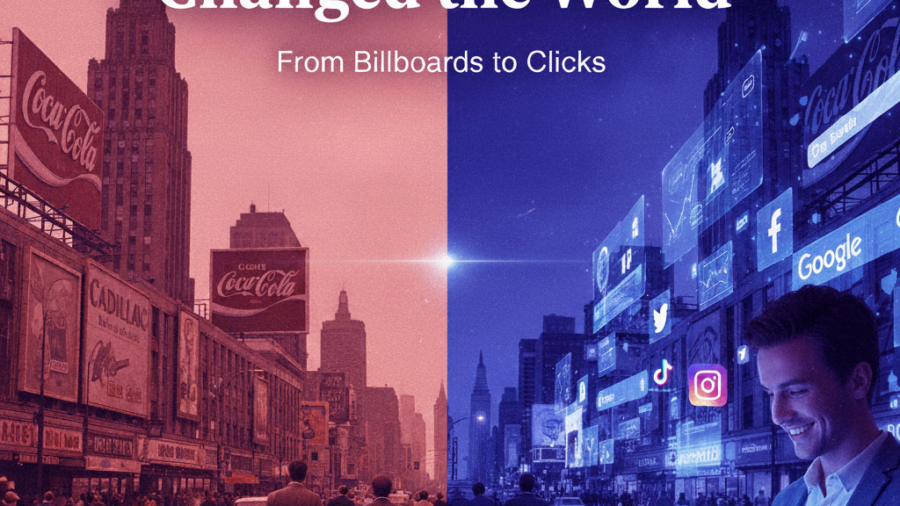
How Digital Marketing Changed the World : From Billboards to Clicks

In just a few decades, the way we live, shop, and communicate has undergone a radical transformation. Gone are the days when a brand’s success depended solely on a massive billboard in Times Square or a 30-second TV slot during the news. Today, the world is digital, and the bridge between a business and its customer is just a click away.

Here is how digital marketing has fundamentally reshaped our global landscape.


1. The Death of Geographical Boundaries

Before the digital era, small businesses were often confined to their local neighborhoods. If you owned a boutique in a small town, your customers were only the people who lived nearby.

  • The Change: Digital marketing has leveled the playing field. A craftsman in a remote village can now sell handmade goods to a customer in New York via Instagram or an e-commerce store. The world is now one giant marketplace.

2. From “Shouting” to “Listening”

Traditional marketing was a one-way street: brands “shouted” their messages at you through radio or print, and you had no way to talk back.

  • The Change: Social media and review platforms have turned marketing into a two-way conversation. Brands now listen to real-time feedback, answer questions in the comments, and adapt their products based on what the “crowd” actually wants.

3. Hyper-Personalization: Ads That Actually Matter

We’ve all experienced it—you search for a pair of running shoes, and suddenly, your feed is full of helpful gear. While some find it “creepy,” it is a massive shift from the “spray and pray” method of old marketing.

  • The Change: Instead of seeing irrelevant ads for things you don’t need, data-driven marketing ensures you see content tailored to your interests. It saves consumers time and helps businesses spend their budgets more efficiently.

4. The Rise of the “Micro-Influencer”

In the past, only A-list celebrities had the power to influence public opinion.

  • The Change: Digital marketing birthed the Influencer Era. Today, a person with a few thousand dedicated followers can have more impact than a movie star. This has democratized “fame” and allowed niche communities—from vegan cooking to high-tech coding—to thrive.

5. Real-Time Success Tracking

Imagine spending $50,000 on a newspaper ad and having no idea how many people actually bought your product because of it. That was the reality for decades.

  • The Change: With tools like Google Analytics and Meta Insights, businesses can see exactly how many people clicked, how long they stayed, and what they bought. This transparency has made business growth faster and more scientific than ever before.


The Future: AI and Beyond

As we move into 2025 and beyond, technologies like Artificial Intelligence (AI) and Augmented Reality (AR) are set to change the world again. We are moving toward a world where you can “try on” clothes virtually in your living room or have an AI assistant find the best deals for you automatically.

Conclusion: Digital marketing didn’t just change how we sell things; it changed how we connect. It turned the world into a global village where every voice has a chance to be heard and every small idea has the potential to become a global brand.
 

AI

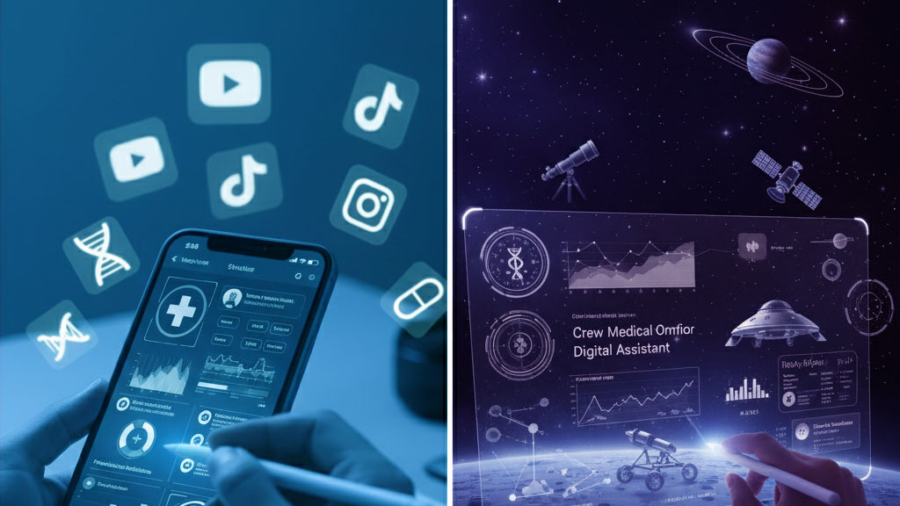
AI : Revolutionizing the Frontiers of Health and the Cosmos

The rapid evolution of Artificial Intelligence is not just reshaping our daily lives; it’s actively transforming fields as diverse as medical science and space exploration. Far from being a futuristic dream, AI is already an indispensable tool, accelerating discoveries and pushing the boundaries of what’s possible for humanity, both within our bodies and across the vastness of the universe.


AI in Medical Science : A New Era of Healthcare

The impact of AI on healthcare is profound and ever-expanding. From diagnosis to drug discovery, AI is proving to be a game-changer:


  • Accelerating Diagnosis: AI algorithms can analyze medical images (X-rays, MRIs, CT scans) with incredible speed and accuracy, often detecting subtle anomalies that might be missed by the human eye. This leads to earlier and more precise diagnoses for conditions like cancer, retinal diseases, and neurological disorders.
  • Personalized Treatment Plans: By crunching vast datasets of patient information, genetic profiles, and treatment outcomes, AI can help doctors craft highly personalized treatment plans. This moves us closer to precision medicine, where therapies are tailored to an individual’s unique biological makeup.
  • Drug Discovery and Development: The traditional process of bringing a new drug to market is lengthy and expensive. AI is streamlining this by identifying potential drug candidates, predicting their efficacy and toxicity, and optimizing molecular structures, drastically cutting down research time and costs.
  • Robotics in Surgery: AI-powered robots assist surgeons with unparalleled precision, reducing invasiveness, improving patient recovery times, and enabling more complex procedures.
  • Predictive Analytics: AI can predict disease outbreaks, identify patients at high risk for certain conditions, and optimize hospital resource allocation, improving public health management and operational efficiency.


AI in Space Science : Unlocking Cosmic Secrets

Beyond Earth, AI is an essential partner in humanity’s quest to understand the cosmos. The sheer volume and complexity of data generated by telescopes and probes are perfect playgrounds for AI:

  • Exoplanet Discovery and Characterization: AI sifts through enormous amounts of astronomical data to identify potential exoplanets and analyze their atmospheres for signs of habitability, helping us find worlds beyond our own.
  • Autonomous Spacecraft Navigation: For missions to distant planets or deep space, real-time human control is impossible. AI enables spacecraft to make autonomous decisions, navigate treacherous terrains, and adapt to unforeseen challenges without human intervention, ensuring mission success.
  • Processing Astronomical Data: Telescopes like the Hubble and James Webb generate terabytes of data daily. AI algorithms are crucial for filtering noise, identifying patterns, classifying celestial objects, and even generating stunning images from raw data.
  • Optimizing Rover Operations: On Mars, AI helps rovers like Perseverance choose optimal paths, identify interesting geological features for study, and manage their power consumption, maximizing scientific output.
  • Predicting Space Weather: AI models analyze solar activity to predict space weather events (solar flares, coronal mass ejections) that can disrupt satellites, power grids, and pose risks to astronauts, allowing for timely protective measures.


The Symbiotic Future

In both medicine and space, AI doesn’t replace human ingenuity but augments it. It frees scientists and doctors from repetitive tasks, allows them to process information at scales previously unimaginable, and provides insights that propel discovery forward. As AI continues to advance, its role in improving human health and unraveling the mysteries of the universe will only grow, promising a future where the impossible becomes routine.

What are your thoughts on AI’s role in these critical fields? Share in the comments below!

YT

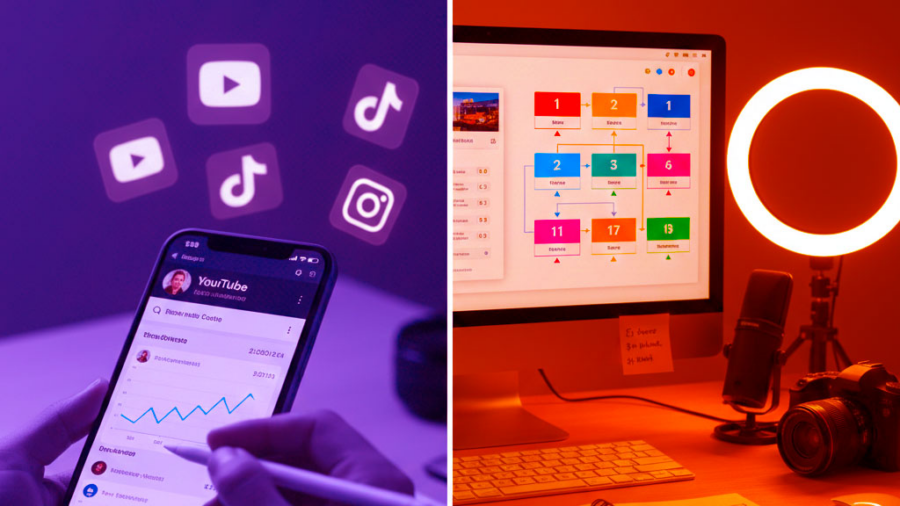
10 Steps to a Killer YouTube Social Media Strategy

In the crowded digital landscape, simply uploading videos to YouTube isn’t enough. To truly stand out and build a thriving channel, you need a robust social media strategy. This isn’t just about sharing your YouTube links; it’s about building a community, driving engagement, and ultimately, converting viewers into loyal subscribers.

Here are 10 essential steps to map out an effective social media strategy for your YouTube channel:


1. Define Your Niche and Target Audience

Before you even think about content, you need to understand who you’re talking to and what you’re talking about. What specific topic or type of content will your channel focus on? Who is your ideal viewer? What are their demographics, interests, pain points, and viewing habits? This clarity will inform every subsequent decision.


2. Set Clear, Measurable Goals

What do you want to achieve with your YouTube channel and social media efforts? Do you want to increase subscribers, boost watch time, drive traffic to a website, or generate leads? Your goals should be SMART: Specific, Measurable, Achievable, Relevant, and Time-bound. For example, “Gain 1,000 new subscribers in the next three months.”


3. Competitor Analysis: Learn from the Best (and Worst)

Who are your direct and indirect competitors on YouTube and other social platforms? What are they doing well? Where are they falling short? Analyze their content, engagement rates, social media presence, and what resonates with their audience. This can spark ideas and help you identify opportunities to differentiate yourself.


4. Choose Your Social Media Platforms Wisely

You don’t need to be everywhere. Focus your efforts on the platforms where your target audience spends the most time. For YouTube creators, Instagram, TikTok, Twitter, and Facebook are often strong contenders. Consider how each platform can complement your YouTube content.


5. Develop a Content Strategy for Each Platform

Each social media platform has its own nuances and best practices. Your Instagram strategy won’t be identical to your TikTok strategy. How will you repurpose and adapt your YouTube content for shorter, more visual platforms? Think about behind-the-scenes glimpses, polls, Q&As, short clips, and engaging images.


6. Create a Consistent Posting Schedule

Consistency is key to maintaining audience engagement and growing your following. Develop a realistic content calendar for each social media platform. This helps you stay organized and ensures a steady stream of valuable content for your audience.


7. Optimize Your Profiles and Bios

Your social media profiles are often the first impression a potential viewer has of your brand. Ensure your profile picture, banner, and bio are optimized and consistent across all platforms. Include clear calls to action and links to your YouTube channel.


8. Engage, Engage, Engage!

Social media is a two-way street. Don’t just broadcast; interact with your audience! Respond to comments, answer questions, participate in relevant conversations, and run polls or Q&As. Building a community fosters loyalty and encourages shares.


9. Utilize Analytics to Track and Adjust

Most social media platforms offer built-in analytics. Regularly review these insights to understand what content is performing well, what times of day your audience is most active, and where your traffic is coming from. Use this data to refine your strategy and make informed decisions.


10. Collaborate and Cross-Promote

Partnering with other YouTubers or creators in your niche can expose your channel to new audiences. Look for opportunities to collaborate on videos, cross-promote each other’s content, or even host joint live streams. This can be a powerful growth hack.